Before BTS, no Korean artist had ever reached #1 on the Billboard Hot 100. To understand why that matters, you need to understand what came before.
For decades, Korean artists tried to break into the American market. And for decades, they failed. Not because they weren't talented — but because the wall was impossibly high.
K-pop groups from Korea's biggest entertainment companies invested millions into U.S. debuts. They recorded English-language albums, hired American producers, flew across the Pacific with hope. And almost every single time, the result was silence. Not a low ranking — no ranking at all. Korean media didn't even bother reporting on these attempts because there was nothing to report.
The barriers were brutal. Korean artists weren't fluent in English. Even when they sang in English, the pronunciation felt foreign to American ears. And even if the music was perfect, no one would give them a stage. No venue, no radio station, no TV show would take a chance on an unknown act from South Korea.
After years of failure, Korea's biggest agencies simply gave up on America. The consensus became: the U.S. market is impossible for Asians.
PSY's "Gangnam Style" exploded in 2012. The catchy beat and iconic dance went viral worldwide. But it peaked at #2 on the Hot 100 — not #1. And in Korea, everyone understood: this was a novelty hit, not a musical breakthrough. PSY was never judged on his artistry in America. He was a meme. And the difference between #2 and #1 is not one position — it's an entirely different legacy.
After Gangnam Style faded, the wall felt higher than ever. "Asians can't make it in America" — this wasn't just an industry belief. It was a cultural wound.
Korean food, Korean traditions, Korean culture — none of it had truly broken through in the West. Korea had become an economic powerhouse, but culturally, the world still saw Korean things as niche. Something "quirky people" were into. The Korean government spent enormous budgets trying to promote Korean culture abroad. The results were modest at best.
Not with a government campaign. Not with a billion-dollar marketing push. With music.
① "Dynamite" — September 2020 (3 weeks at #1)
The first. The one that broke the wall forever.
BTS's first all-English song reached #1 during the darkest period of COVID-19. While the world was locked down, a Korean group gave the planet a reason to dance. This wasn't just a chart position — it was proof that the impossible was possible. In Korea, news anchors broke the story mid-broadcast. People who had never listened to BTS celebrated. It wasn't about fandom anymore. It was about national pride. (This journey started years earlier during the HYYH era.)
And it shattered the oldest belief in Korean entertainment: that Asians can't win in America.
② "Savage Love" (Remix) — October 2020 (1 week at #1)
Suga and J-Hope jumped on Jason Derulo's viral track and pushed it to #1. BTS was no longer a one-time miracle. They were a force.
③ "Life Goes On" — December 2020 (1 week at #1)
The most significant #1 after Dynamite — because this song was in Korean. The first Korean-language song to ever top the Hot 100. Dynamite proved BTS could win playing by American rules. "Life Goes On" proved they could win playing by their own.
④ "Butter" — June 2021 (10 weeks at #1)
Ten weeks. The longest-running #1 of BTS's career, and one of the longest in Hot 100 history. While the world debated whether BTS was a passing trend, Butter answered: they're not going anywhere.
⑤ "Permission to Dance" — July 2021 (1 week at #1)
Co-written by Ed Sheeran. BTS replaced themselves at #1 — Butter dropped to #2 as Permission to Dance took over. Only a handful of artists in history have done this.
⑥ "My Universe" (with Coldplay) — October 2021 (1 week at #1)
A collaboration that would have been unthinkable five years earlier — one of Britain's biggest bands choosing to sing with a Korean group. Sung in both English and Korean. A symbol of how far BTS had moved the needle. (Curious what this success means financially? See our BTS net worth breakdown.)
⑦ Jimin — "Like Crazy" — April 2023 (1 week at #1)
The first BTS solo member to reach #1. Jimin proved that BTS's power wasn't just the group — each member carried that same magic individually.
⑧ Jungkook — "Seven" (feat. Latto) — July 2023 (1 week at #1)
The youngest member, solo #1. At this point, BTS and its members had reached #1 eight separate times. No Korean act had done it once before 2020.
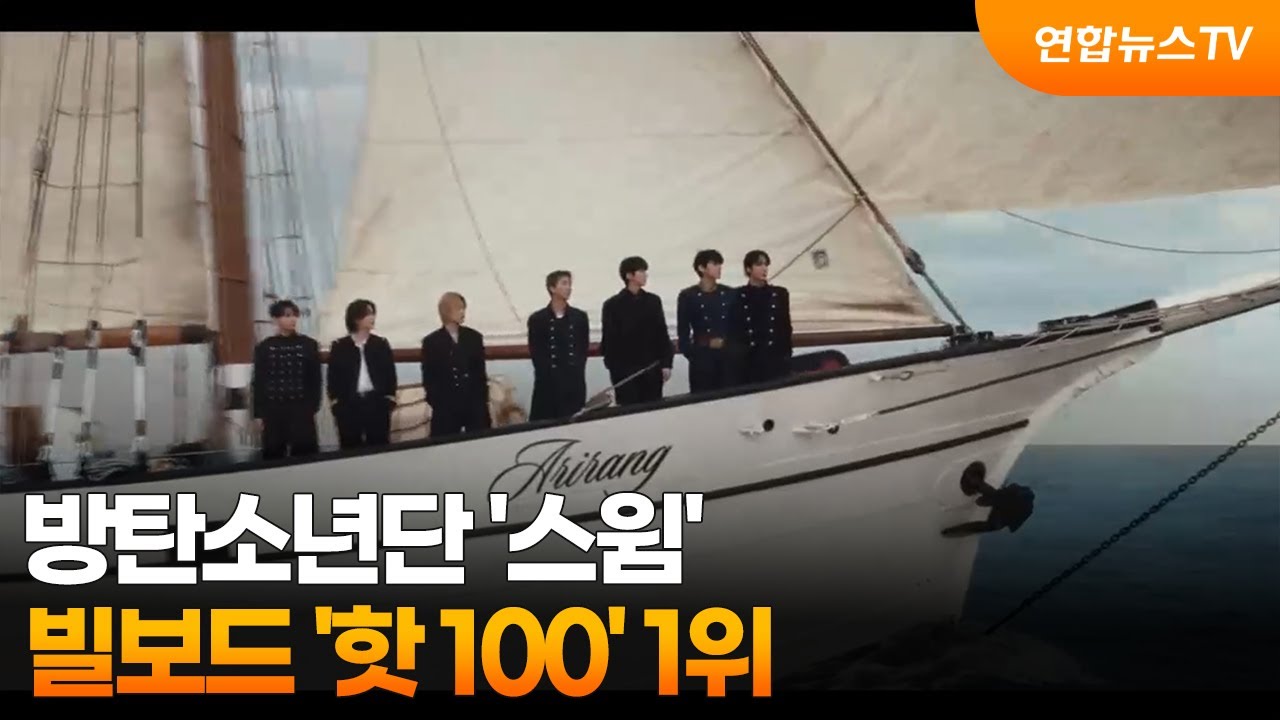
⑨ "SWIM" — April 2026 (#1 — confirmed)
Four years of military service. Four years of silence as a group. And then — #1 again.
The music video was filmed at Seonhyewon, a traditional Korean garden — BTS chose to frame their biggest comeback not with flashy Western aesthetics, but with the quiet beauty of Korean heritage. That choice tells you everything about where they are now.
This is BTS's 7th group #1, and 9th overall including solo. After a four-year hiatus that many predicted would end their dominance, BTS returned and went straight back to the top.
International fans celebrate a #1 as a chart achievement. Koreans feel it differently.
For us, BTS's first #1 wasn't just about music. It was the moment an entire country's inferiority complex cracked. For decades, we believed our culture wasn't good enough for the global stage. We had the technology, the economy, the education — but culturally, we felt invisible. The Korean government spent billions trying to change that. BTS did it with one song.
After Dynamite hit #1, something shifted in Korea that's hard to explain to outsiders. Korean people started re-listening to BTS — not as fans, but as fellow Koreans who wanted to understand what the world was hearing. And many of them, for the first time, genuinely felt the sincerity in BTS's music. The American success made Koreans take BTS seriously as artists, not just idols.
BTS also proved something universal: that language, race, and origin don't determine your ceiling. Before BTS, "Asian artist" and "Billboard #1" existed in separate universes. BTS merged them.
And the proof isn't just in the charts — it's in the crowds. At J-Hope's solo concert in France, thousands of French fans screamed Korean lyrics in unison — "미안해 엄마" ("I'm sorry, Mom"). Not translated. Not subtitled. Pure Korean, shouted back by people who don't speak the language but learned the words by heart.
No government campaign could have achieved this. No cultural budget, no diplomatic effort. A Korean artist stood on a stage in Paris, and the audience sang back to him in his own language. That is the power of BTS.
And now, every Korean artist who charts in America walks through a door that BTS opened.
Even now, jealousy and doubt follow BTS in Korea. "Are they really that good?" "Is it just the fandom manipulating numbers?" "Will it last?" These questions never fully go away. BTS knows this. They've always known.